Visar inlägg med etikett Once. Visa alla inlägg

onsdag 23 september 2026

Reading Log


Reading log – ONCE

This is your reading log. You use the same log for all four parts of the book. It is built on what research says about how people actually learn – so it is not about writing a lot, it is about writing the right things, at the right time.

Why the log looks like this

Your brain does not learn by reading. It learns by pulling things back out. That is why most of this log asks you to close the book before you write. 

The log – do this for every part

Write the part number and the date at the top.

Step 1 – Before you read (5 min, book closed)

  • Brain dump. Write everything you remember from the previous part – events, names, places, feelings. No looking. Two minutes. (Part 1: write everything you remember from chapter 1 and the facts we talked about.)
  • Prediction. Read the title of the part in the instructions. Write one sentence: I think in this part… Give one reason.

Step 2 – While you read (as you go)

  • Every time something important happens, write it down in your own words – one line, no copying. 
  • Collect five words you didn't know. For each one: the word, what it means, and a sentence of your own using it. Not the sentence from the book.
  • Write down one question you have while reading. Anything: Why did Felix…? What is a…? Is that true?

Step 3 – After you read (10 min, book closed)

  • Brain dump again. Write everything you remember from this part. Then open the book and add what you missed in a different colour. The colour shows you what your brain drops that is what to look at again.
  • Self-quiz. Pick three questions from the On the lines list for this part. Answer them without looking. Then check.
  • Explain it. Choose one event from your list and answer: Why did this happen? What did it change? Two or three sentences.
  • Connect it. Finish this sentence: This part connects to the earlier part because…

Step 4 – Check yourself (3 min)

Question

Your answer

How well do I understand this part? (1 = lost, 5 = I could explain it to someone)

Was my prediction right? What actually happened instead?

Which of my three quiz answers was I least sure about – and was I right?

What was hard in this part – the language, the story, or something else?

One thing I will do differently when I read the next part:

Step 6 – Sixty seconds (in your group)

Take turns. Each person explains the part in sixty seconds, book closed, log closed. The others listen and then add one thing that was missed. Teaching something is the strongest test of whether you know it.

Once a week – the look-back

At the start of each new part, before Step 1, spend three minutes on the parts before the previous one. Book closed, log closed:

  • Three things I still remember from Part …
  • One thing I had forgotten (check the log, then write it down).

. Ask yourself in week 5 how much of Part 1 you still remember – you will be surprised.

My word bank

Keep all your words from Step 2 in one list here. At the end of the book you will have twenty words that are yours. Test yourself on them: cover the meaning, say it, check.

tisdag 22 september 2026

ONCE- Morris Gleitzman


Welcome to ONCE

This term we are going to read a book that is small, fast and about a boy who tells stories to survive. His name is Felix, he is ten, and he lives in Poland in 1942. He thinks he knows what is going on around him. He doesn't. You will understand things long before he does – and that is what makes this book so hard to put down.

Here is how we work:

  • We read the book in four parts. For every part you get instructions, words to learn and questions on three levels: on the lines (what does the text say?), between the lines (what does the text mean?) and behind the lines (why did the author write it like this?).
  • You discuss the questions in your reading group, then we talk in class. Write your answers in your reading log – short notes are fine, but always point to the text.
  • You keep a Once notebook all the way through (see below). Felix has one. So do you.
  • At the end there is an oral exam in pairs or groups of three. It works like the national test, so you get to practise the format before the real thing in spring.

Week

What we do

1

Before reading + we listen to chapter 1 together

2

Part 1 – The orphanage

3

Part 2 – The journey

4

Part 3 – The city and the cellar (+ practice round of the oral exam)

5

Part 4 – The train

6

Oral exam

7

After reading – writing

You can listen to the first chapter for free on Morris Gleitzman's website. Feel free to listen before class if you want to feel prepared.


Before reading

1. The quote

"Everybody deserves something good in their life at least once."

Think about it on your own for a few minutes. Then talk in your groups:

  • Do you agree or disagree? Why?
  • Tell each other about a memory when you felt really happy. What made it so good?
  • These words come from the book we are going to read. What do you think the book will be about?

2. The title

The book is called Once. Look the word up. It has more than one meaning. Which meaning do you think the author is going for? Write down your guess – we come back to it at the end of the book.

3. Facts you need before we start

  • The story takes place in Poland in 1942, during the Second World War. Germany has occupied Poland. The Nazis are hunting Jewish people.
  • Many Jewish parents tried to save their children by hiding them – with Christian families, in convents, in orphanages. Felix's parents did exactly this. He has been hidden in a Catholic orphanage for three years and eight months.
  • Morris Gleitzman was born in England in 1953 and grew up in Australia. His grandfather was Jewish and came from Poland. Most of his grandfather's family were murdered in the Holocaust. Felix and Zelda are invented, but the world they live in is real.
  • Once is the first of seven books about Felix. In the last one he is over eighty years old. If you like this one, there is a lot more to read.

4. Words to know before chapter 1

Talk about these in your group and make sure everyone knows what they mean:

  • orphanage
  • convent
  • nun
  • the Virgin Mary
  • the Pope
  • I almost caused a riot – what did Felix almost do?
  • Jewish
  • Nazi
  • bookseller

5. Reading

We read chapter 1 together in class. Then, in your group:

  1. Describe and discuss your first impressions of Felix and Mother Minka. Choose one more character from the opening chapter. What do you think they look like? What kind of people are they?
  2. Why is it so special that Felix finds a whole carrot in his soup?
  3. Help each other with words you don't know. Start a word list for your group. You add to it every week.

Part 1 – The orphanage

Read: from the beginning until Felix leaves the orphanage.

While you read

  • Notice how every chapter begins. What is the first word? Why do you think that is?
  • Keep a list of things Felix thinks are true. Put a question mark next to the ones you are not so sure about. This list will grow.
  • Add new words to your group's word list. Pick five that you think everyone should know and explain them to the class.

On the lines

  1. How long has Felix lived at the orphanage? Why is he there, according to Felix?
  2. What does Felix do with the carrot, and why?
  3. Who is Mother Minka? Give three facts about her from the text.
  4. What do the Nazis do when they come to the orphanage?
  5. What does Felix take with him when he leaves? Why does he leave?

Between the lines

  1. Felix thinks the Nazis only hate Jewish books. What does the reader understand that Felix doesn't?
  2. Why does Mother Minka let Felix stay, even though it is dangerous for her? What does that tell you about her?
  3. Felix is very good at explaining things so that they seem okay. Find one example. Why do you think he does this?
  4. Is Felix's decision to leave brave, naive – or both? Explain with examples from the text.

Behind the lines

  1. Why does Gleitzman let a ten-year-old tell the story? What would change if Mother Minka told it instead?
  2. Every chapter starts with Once – like a fairy tale. What effect does that have on you as a reader?
  3. Gleitzman mixes humour with something terrible. Find one place where you laughed, or almost laughed. Why do you think the author wants you to laugh here?

Group talk (10 min): Compare your lists of things Felix believes. Which of his beliefs do you think will be the first to break?

Part 2 – The journey

Read: from Felix leaving the orphanage until Felix and Zelda reach the city.

While you read

  • Zelda arrives in this part. Write down three things she says that tell you who she is.
  • Felix tells a lot of stories in this part. Every time he tells one, ask yourself: who is the story for – Zelda, or Felix himself?
  • Look for the moment when Felix starts to understand what is really happening. Mark it.

On the lines

  1. What does Felix find in the burning house? Who is Zelda?
  2. What does Felix tell Zelda about her parents? Is it true?
  3. Describe the people Felix and Zelda meet on the road. What are they doing, and why?
  4. What does Felix do with his notebook during the journey?

Between the lines

  1. Why does Felix tell Zelda stories instead of the truth? Is he lying – or is it something else? Discuss.
  2. Zelda keeps saying "Don't you know anything?" What does that show about her? What does it show about the difference between the two children?
  3. Felix finds something in the burnt house that he decides not to tell Zelda about. Why does he keep it a secret? Would you have done the same?
  4. When does Felix start to understand? Point to the exact place in the text and explain how you know.

Behind the lines

  1. Why does the author give Felix a companion? What would the book lose without Zelda?
  2. Gleitzman never describes violence in detail – Felix looks away, or explains it as something else. Why do you think the author chose this way of writing about war?
  3. Who is this book written for, do you think – children, teenagers, adults? Give reasons.

Group talk (10 min): Felix protects Zelda with stories. Is that kindness or is it cowardice? Try to argue for both sides before you decide.

Part 3 – The city and the cellar

Read: from the city until the Nazis find the cellar.

A real person behind the story

In this part you meet Barney, a dentist who hides Jewish children. Barney is invented, but Gleitzman based him on a real man: Janusz Korczak, a doctor and teacher who ran an orphanage for Jewish children in the Warsaw ghetto. In 1942 he was offered a chance to escape. He said no. He stayed with his children, and when they were sent to the death camp Treblinka, he went with them. Keep him in mind when you read about Barney.

While you read

  • There are several children in the cellar. Make a small table: name, age (if you know it), one thing that makes them special.
  • Felix has changed since chapter 1. Collect evidence: what does he do or say now that he would not have done at the orphanage?
  • Add words to your word list. This part has a lot of words about the city and the ghetto – make sure you understand them.

On the lines

  1. Who is Barney and what does he do for a living? How does that help the children?
  2. Choose one of the other children in the cellar and describe them.
  3. What does Felix find out about his parents' bookshop?
  4. What are the rules in the cellar? Why are they so strict?

Between the lines

  1. Barney fixes the teeth of Nazi officers. Why does he do it? What might he be feeling while he works?
  2. Felix is still keeping his secret about Zelda's parents. Why? Has your opinion about this changed since Part 2?
  3. How has Felix changed since chapter 1? Give two examples from the text and explain what they show.
  4. Felix's stories seem to work less and less well. Find a place where a story does not help. What happens instead?

Behind the lines

  1. Barney is based on Janusz Korczak. Why do you think Gleitzman wanted a real adult in a story about invented children?
  2. The author lets Felix's stories become weaker as the book goes on. What is he trying to say about stories – and about growing up?
  3. The title of the book is Once. Now that you have read this far – what do you think it means? Compare with your guess from before reading.

Group talk (10 min): Barney lies to the Nazis every day to keep the children alive. Felix lies to Zelda to keep her happy. Is it the same kind of lie? Where do you draw the line?

Part 4 – The train

Read: to the end of the book. Read it in one go if you can. Don't look at the last page first.

While you read

  • Watch what happens to Felix's notebook. Follow it all the way.
  • When Barney makes his choice, stop for a moment. Write down what you feel before you read on.
  • Go back to the quote we started with: "Everybody deserves something good in their life at least once." Who says it, and when?

On the lines

  1. What choice does Barney make when the Nazis come? What could he have done instead?
  2. How do Felix and Zelda get off the train?
  3. What happens to Felix's notebook?
  4. Who does not make it? How does Felix react?

Between the lines

  1. Barney says that everybody deserves something good in their life at least once. Has Felix had his "once"? Has Zelda? Has Barney?
  2. Felix's notebook ends up as toilet paper – and then it helps them escape. What might the author want to say with that?
  3. The book ends on the run, without answers. Why do you think it ends there? How did the ending make you feel?
  4. Look at the last lines of the book. How are they different from the first lines? What has happened to Felix in between?

Behind the lines

  1. Gleitzman has said that the book is about how stories help us survive. Do you agree after reading it? Where in the book do stories help – and where do they fail?
  2. Why do you think an Australian author, born after the war, wrote this book? What might he want a reader in 2026 to think about?
  3. Gleitzman wrote six more books about Felix. What do you think happens to him next – and would you want to read on? Why, or why not?
  4. Think about the whole book. What is the one thing you will remember from it? Why that?

Group talk (10 min): Your first guess about the title – were you right? Decide together on the best explanation of why the book is called Once.

Your Once notebook

Felix carries a notebook. He writes stories in it to make sense of a world that makes no sense. You are going to do the same.

Get a small notebook (or a document you keep just for this). After each part of the book, write a short text – 100 to 200 words is enough. Every text must begin with the word Once. Here are your four prompts:

After

Write

Part 1

Once I believed something that turned out not to be true. A memory of your own – big or small.

Part 2

Once there was a girl called Zelda. Tell a story Felix might tell her, in Felix's voice.

Part 3

Once, in a cellar… Choose one of the other children and write a piece of their story.

Part 4

Once… Your own choice. A continuation of the book, a letter, a memory, anything.

In the last week you choose your best text and read it to your group. Nobody grades the notebook – it is yours. But I will read it if you let me, and I would love to.

Oral exam – Let's talk about Once

How it works

You talk in pairs or groups of three for about 12–15 minutes. I sit with you and listen. I will not lead the conversation – that is your job. It works exactly like part A of the national test, so this is good practice.

  1. Warm-up (2 min): Tell each other: what was the strongest moment in the book for you?
  2. Cards (10 min): You take turns drawing a card. Read it out loud. Then talk about it – all of you. When the conversation dies, draw a new card. Aim for four or five cards.
  3. Round-off (2 min): Would you recommend this book to a friend? Give two reasons.

What I am listening for

  • Do you stay on the topic and say something with substance? Do you use examples from the book and from your own life?
  • Do you keep the conversation going – ask questions, build on what the others say, help someone who gets stuck?
  • Is your English varied and reasonably correct? Can you express yourself even when you don't know the exact word?

Nobody expects perfect English. I expect you to talk.

Useful phrases

  • I agree with you, but… / I see it differently, because…
  • What do you think? / What about you? / Do you remember the part when…?
  • In the book there is a scene where… / For example, when Felix…
  • I'm not sure how to say this, but…
  • Can you explain what you mean?

Discussion cards

Cut these out and put them face down on the table.

1. Stories can save lives. Agree or disagree?

2. Children should always be told the truth, even when it hurts.

3. Felix chooses to leave the orphanage. Was it the right decision?

4. Barney could have saved himself. Was his choice brave – or wrong?

5. Hope is more important than facts.

6. Is Felix a hero? What makes someone a hero?

7. Felix lies to Zelda to protect her. Is a lie ever the right thing to do?

8. Why should young people today read books about the Holocaust?

9. Which character changed the most in the book? Explain.

10. If you could ask Morris Gleitzman one question, what would it be?

11. "Everybody deserves something good in their life at least once." What is your "once"?

12. Zelda is only six, but she often understands more than Felix. Why?

13. The book is funny and terrible at the same time. Does that work?

14. Felix's notebook: what does it mean to him at the start, and at the end?

15. You can't understand history if you only read facts – you need stories too.

16. Should there be a film of Once? Who would you cast as Felix and Zelda?

Practice round (week 4): We try the format once before the exam, with the cards from Parts 1 and 2 only. No grade – just so the real thing is not the first time.

After reading – choose one

Write 300–500 words. Choose the task that interests you most.

  1. Book review. Write a review for next year's Year 9. What is the book about (no spoilers!), what did you like, what didn't work for you, and who should read it? Give it a grade out of five and explain why.
  2. Letter to Morris Gleitzman. Tell him what the book did to you. Which scene stayed with you? What did you think about while reading? End with one question you would really like him to answer.
  3. Once… Write your own story in Felix's style. Every paragraph starts with Once. It can be about anything – but it should be about something that matters to you.
  4. Zelda's chapter. Choose one scene from the book and write it again from Zelda's point of view. What does she see, understand and feel that Felix doesn't?

Hand in through Classroom. And if you want to keep reading: the next book is called Then. It starts exactly where Once ends.

måndag 26 februari 2024

ONCE


Once - lesson 1


Lesson 1 Monday

What do you think about the quote above? Do you agree or disagree?
Can you think of a memory when you felt really happy?

1. Think about it on your own, for a few minutes
and then talk about your memories in your groups.

You can find the sentences in the picture above in the book we will read.
Take a look at the cover of the book: 

What do you think the book will be about?

2. Before we start listening we need to take a look at some words:

Do you know what an orphanage is?
I almost caused a riot - What did he almost do?
Who is the Virgin Mary and The Pope? 
What is a nun?


We are going to listen to the first chapter together in class. 

Together in the group, I want you to discuss and answer the questions below. Help each other!

Lesson 2 

1. Answer the questions in the document named ONCE- questions
2. Go to the Reading log and fill out the form. 
3. Copy the chat and past it in the document ONCE- questions. 
4. Hand in both the Reading log and ONCE- questions.

The questions 
* Before you answer the questions - always go to the "Text and thought" first and make sure you have taken notes while reading. 

Reading Log - text and thought

Go to the Reading Log in Classroom and write down a quote and your thoughts.

You find the READING LOG here as well. Make your own copy!


* Answer the questions in the document "Questions" in Classroom.


Chapters 1-2

 Describe and discuss your first impressions of Felix and Mother Minka.


 - What do you think they look like?

 - What kind of persons are they?

- Where is Felix and why?

-How old do you think he is?


2. Why was it so special that Felix found a whole carrot in his soup?


 ‘Once I stayed awake all night, waiting for Mum and Dad to arrive.’ 


3. What does this quote mean to Felix?

4. Why is Felix’s notebook so important to him? Identify 4 things this notebook symbolizes.

5. Do you think Felix will ever meet his parents again? Motivate your opinion


Chapter 3 (page 18)
 “Once I saw a customer, years ago, damaging books in Mum and Dad’s shop. Tearing pages out. Screwing them up. Shouting things I couldn’t understand.” 

1. Identify two things that make Felix worried and explain how his thinking starts to change. Back our thoughts with quotes from the text.
2. Felix has plans to help his mother and father. What are they, and what motivates him to take action? 

Chapter 4 (page 29)
 “Once I escaped from an orphanage in the mountains and I didn’t have to do any of the things you do in escape stories.” 
1. List some of the reasons Felix thinks he is lucky. List things you think he could complain about. 
2. What indications are there—recognized or missed by Felix—that something is terribly wrong? What explanations does Felix come up with to make sense of things?

 Chapter 5 (page 41)
 “Once I walked all night and all the next day except for a short sleep in a forest and all night again and then I was home.” 
1. Contrast Felix’s dreams with the reality of what he discovers when he makes it home. 2. Describe the different emotions he experiences. 

Chapter 6 (page 53)
 “Once I walked as fast as I could towards the city to find Mum and Dad and I didn’t let anything stop me. Not until the fire.” 

1. What changes have taken place in and how do they influence his actions? 
2. How does Felix control his anxiety?

Chapter 7 (page 62)
 “Once I woke up and I was at home in bed. Dad was reading me a story about a boy who got left in an orphanage. Mum came in with some carrot soup. They both promised they’d never leave me anywhere. We hugged and hugged.” 

1. What are the meanings of the armbands? What do Felix’s predictions about the future signify? 
 2. How does Felix answer his own question, “Why would the Nazis make people suffer like this just for the sake of some books?” (page 70) Why is this the turning point?

 Chapter 8 (page 72) 
“Once I spent about six hours telling stories to Zelda, to keep her spirits up, to keep my spirits up, to keep our legs moving as we trudged through the rain toward the city.” 

1. Why does Felix go from six hours of storytelling to keep Zelda’s spirits up to the point where he suddenly hasn’t got any more stories (page 80)? 
2. How do Felix and Zelda manage to survive?

Chapter 9 (page 81)
 “Once I lay in the street in tears, because the Nazis are everywhere and no grown-ups can protect kids from them, not Mum and Dad, not Mother Minka, not Father Ludwik, not God, not Jesus, not the Virgin Mary, not the Pope, not Adolf Hitler.”

 1. Explain what Barney is doing. What sort of person do you think he is? What does he represent?
 2. What impact does the realization that no one can protect the children have on Felix? 

Chapter 10 (page 91) 
“Once I was living in a cellar in a Nazi city with seven other kids when I shouldn’t have been.”
 1. Use an example of Felix’s behaviour or “self-talk” to illustrate his unusual degree of maturity and self-awareness. Explain your reasoning. 
2. What story “saved his life,” and what connections does he finally make? 

Chapter 11 (page 99) 
“Once I escaped from an underground hiding place by telling a story. It was a bit exaggerated. It was a bit fanciful. It was my imagination getting a bit carried away.” 

1. What lengths does Felix go to when trying to “escape”? How does Barney handle it? 
2. What does Felix discover about Barney, and how does Barney make Felix help him?

 Chapter 12 (page 112)
 “Once a dentist stopped me from asking a Nazi officer about my parents and I was really mad at him.” 

1. Why did Barney stop Felix from asking about his parents? Why do he and Felix decide that Zelda needs to know the truth? 
 2. Describe the range of reactions the children are showing as a result of the traumas each has suffered. How do you feel about the stories shared by the children?

 Chapter 13 (page 121) 
“Once I told Zelda a story that made her cry, so I lay on her sack with her for hours and hours until she fell asleep.” 
1. Analyze Barney’s gesture of giving Felix new boots. What does he mean by what he says to Felix on page 122? What other “good things” does Felix seem to think he’s got, and what can you see in him that is good (e.g., his hope and optimism)? 
2. Felix makes a terrible discovery in the chapter and Barney is forced to tell him some awful truths about what is going on. What is Felix torn between as he tries to take it all in? 

Chapter 14 (page 132)
 “Once I loved stories and now I hate them.” 
1. Describe Felix’s state of mind as this chapter opens. Describe your own feelings as you read about his close shaves and what he discovers upon returning to his hideout.
 2. The importance of books is emphasized in this chapter. Felix’s favorite gets him into terrible danger, but other books save him. What do books symbolize and mean for Felix? 

Chapter 15 (page 144)
 “Once the Nazis found our cellar. They dragged us all out and made us walk through the ghetto while they pointed guns at us.” 
1. Barney and Zelda wouldn’t go. Why not? Think of three more reasons. 
2. What is important to Felix as they head to the railway station? What is important to the others as they are tossed aboard the train? 

Chapter 16 (page 153) 
“Once I went on my first train journey, but I wouldn’t call it exciting—I’d call it painful and miserable.”
 1. Once again, a book becomes a saviour of sorts. Explain how. What is the significance of the fact that Felix is willing to use—and virtually lose—his notebook? 
2. What choice and possible outcomes does the hole in the carriage create for the people inside? 

Chapter 17 (page 162)
 “Once I lay in a field somewhere in Poland, not sure if I was alive or dead.”
 1. Felix feels fortunate: “However my story turns out, I’ll never forget how lucky I am” (page 163). What is your explanation for this? 
2. Knowing Felix as you do by the end of the novel, how do you think his story might continue?

Final writing assignment
Imagine that you are an adult and that a teacher has asked you to write a personal narrative to tell her 15-year-old students what you have been through. 

Choose one of the following assignments:
Write between 150 and 600 words, size 12. 
Text type: personal narrative 

1. You are Felix, the main character of the book Once. You are now an adult.  You tell them what happened to you when you were a child. Pick 2-4 situations and describe how they have affected you as an adult.
2. You are a Jewish survivor and you tell them what you have been through. Pick 2-4  situations from the book and describe how they have affected you to become the person you are today.
3. You are an ex-soldier, who didn't agree with Hitler during the war. Pick 2-4 situations from the book and describe what you were forced to do and how you felt about that.


To prepare, take a look at the template below on how to write a personal narrative. Remember to show and don't tell! 
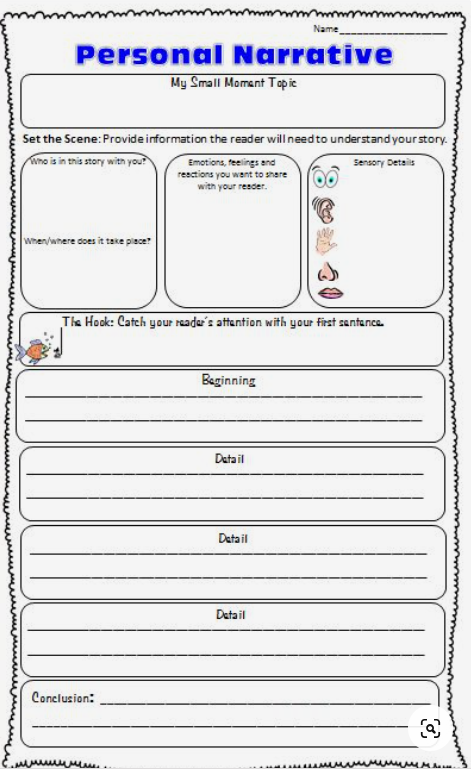


Example: 
When I was a child my parents needed to leave me at an orphanage. My family are Jewish and... 
or
I never wanted to be a soldier but I had to. I had no choice. 


tisdag 22 oktober 2019

Discussion!

Today you will work in pairs and you will discuss the book we have read. 
Record your discussion by using Screencastify and the webcam.  When you are finished - copy the link to the film and hand in to me in Classroom. 
Make sure that both of you are talking and that you are having a conversation.
Choose at least 12 questions to talk about. 

1. What is the text about?
2. Was the book the way you had expected? Explain. 
3. What is the conflict/problem in the text?
4. Is the text written in chronological order?
5. What important episodes are there?

6. Which character in your book would you like to be? 
Explain why.
7. How does the book end?
8. Do you think that the book could be a good movie? 
Why? Why not?
9. If you were to change one thing in the book, what would you change?
10. Was there any character in the book that you disliked? Who and why?
11. Do you like the ending? 
Explain your thoughts
12. Does the cover of your book fit the story? 
Explain your thoughts
13. When you think of the characters in the book, who would you have liked to be your friend? Why?
14. What is the atmosphere in the book like? Is it sad? Depressing? Happy? Give examples.
15. Who are the main characters? Describe them.
16. What is the relationship between the characters?
Give examples from the book to support your arguments

17. Have you been influenced in any way by the text?
18. Have you experienced any of the feelings expressed in the text?
19. What in the text do you like or dislike?: the characters? The settings? The plot? The language?
20. What do you think about the book? Would you like to recommend other classes to read it? Why? Why not? 

söndag 20 oktober 2019

A Personal Narrative Text

On Tuesday week 43, you are going to write a personal narrative text.

Imagine that You are old, you are in a school telling students in year 9 what you have been through. Choose one of the following assignments:

1.You are Felix, the main character of the book Once, and you tell them what happened to you when you were a child. Pick 2-4 situations and describe how they have affected you as an adult.

2. You are a Jewish survivor and you tell them what you have been through. Pick 2-4 situations and describe how they have affected you to become the person you are today.

3. You are an ex-soldier, who didn't agree with Hitler during the war. Pick 2-4 situations and describe what you were forced to do and how you felt about that.


To prepare yourself, watch the following video about how to write a personal narrative text.


WW2 vs 2019

Monday week 45

Discuss: 

Use the VENN diagram.

1. Can you find anything that happened during WW2 that is the same that is happening in the world today? Write that in the middle of the circle.

2. Write examples of what happened to the refugees during WW2 that aren't happening today in the left part of the circle.

3. Write examples of what is happening today that didn't happen during WW2. Write that in the right part of the circle.

4. During WW2, from which countries did most refugees come and why?

5.  Can you find evidence from Swedish history - have Swedes ever fled our country? If so, when and why? 


You will also get literature cards to discuss, I don't have them online. You will get them when we see each other. 

Tuesday week 45

You are going to work in groups and you can choose between two different tasks. Decide in your groups which one you would like to work with. You only have to work with one of the tasks. You can choose which app you would like to use. Perhaps GreenScreen? I will show you different alternatives.

1. Pretend that you are from the BBC and that you are in Poland during WW2 trying to report what is going on in the country. Suddenly, you find two children in the forest, all alone, hungry and thirsty, close to the railway.  They start telling you their story and you decide that you have to tell the world about these children.

Use the app XXX and create a news report.


- Write a manuscript
- Hand in your text in Google Classroom and ask me to give you feedback when you have written half of it and again when you are finished.
You need a headline that catches the viewers' attention.
You need to talk about why you are in the country. (Background, facts, sources)
You need to talk about the reason why you chose to tell the world about Felix and Zelda.
Summarize their story.
Describe how you felt when you heard their story.
Here you can learn How to write a news report

The show should be about 4 minutes.

- Practice speaking
- Record in XXX and upload to my Youtube account. Tell me when you are finished and I will upload it for you.


2.  Pretend that you are from the BBC and that you are in Poland during WW2 trying to report about what is going on in the country. Suddenly, you find two children, all alone, hungry and thirsty in the forest close to the railway.  They start telling you their story and you decide that you have to tell the world about these children. You decide to make a documentary.

- Write a manuscript
- Hand in the text in Google Classroom and ask me to give you feedback when you have written half of it and again when you are finished. You need a headline that catches the viewers' attention.
You need to talk about why you are in the country. (Background, facts, sources)
You need to talk about the reason why you chose to tell the world about Felix and Zelda.
Summarize their story.
Here you can learn How to write a documentary
- The documentary should about 4 minutes
- Use pictures and add your voice
- Practice speaking
- Record in XXX and upload to my Youtube account. Tell me when you are finished and I will upload it for you.


/ Sara 

söndag 8 september 2019

Once chapter 3-5, week 37

Once chapter 3-5 

You have now understood that the book takes place during World War 2.
Before we move on I would like to know what you already know about WW2.

1. Work in pairs and write down 5-10 things about WW2 that you already know.
2.  Write 3 things that you would like to know more about.

You will get a link to Padlet in Google Classroom. Click anywhere in the Padlet to
start writing.

3. Read chapter 4 and 5.

4. Answer the questions below:
Choose if you would like to write your answer or use SeeSaw and talk instead.
Just let me know what you prefer.

 ‘Once I saw a customer, years ago, damaging books in Mum and Dad’s shop. Tearing pages out. Screwing them up. Shouting things I couldn’t understand.’ 

1. Identify 2 things that unsettle Felix and explain how his thinking starts to change.
2. Felix has plans to help his Mum and Dad. What are they and what motivates him to take action?

‘Once I escaped from an orphanage in the mountains and I didn’t have to do any of the things you do in escape stories.’ 

1. List some of the reasons Felix considers himself ‘lucky’ (p.30)? List things you think he could complain about.
2. What indications are there – recognized or missed by Felix - that something is terribly wrong? What explanations does Felix come up with to make sense of things?

‘Once I walked all night and all the next day except for a short sleep in a forest and all night again and then I was home.’ 

1. Contrast Felix’s dreams with the reality of what he discovers when he makes it home.
2. Describe the range of emotions he experiences. Analyse the emotions he observes in other people that he meets at this point in the story. How would you classify them? (e.g.: negative, strong, fleeting...)

Homework for the 16th of September: 

Make sure you have read chapter 1-5, answered and handed in the answers in Google Classroom or SeeSaw. 

/ Sara 


söndag 1 september 2019

Once - week 36


Lesson 1 Monday

What do you think about the quote above? Do you agree or disagree?
Can you think of a memory when you felt really happy?

1. Think about it on your own, for a few minutes
and then talk about your memories in your groups.

You can find the sentences on the picture above in the book we are going to read.
Take a look at the cover of the book: 

What do you think the book will be about?

2. Before we start listening we need to take a look at some words:

Do you know what an orphanage is?
I almost caused a riot - What did he almost do?
Who is the Virgin Mary and The Pope? 
What is a nun?


We are going to listen to the first chapter together in class. 

Together in the group, I want you to discuss and answer the questions below. Help each other!

1. Describe and discuss your first impressions of Felix and Mother Minka.  Choose one other character introduced in the opening chapter. 

 - What do you think they look like?
 - What kind of persons are they?
- Where is Felix and why?
- What kind of person do you think Felix is?
-How old do you think he is?

2.  Why was it so special that Felix found a whole carrot in his soup?

Lesson 2 Tuesday 

On Tuesday, the 2nd of September I will be in Spain and Peter will take care of you.

Before you start reading - take a look at the words that you might need to understand the text:
Once Chapter 2

1. Read chapter 2 and together in class. Peter will guide you.

2. Answer the questions below. Create a Google document and hand in your answers in Google Classroom.

 ‘Once I stayed awake all night, waiting for Mum and Dad to arrive.’ 

1. What does this quote mean to Felix?
2.. What memories and physical evidence does Felix have of his parents?
3.. What beliefs does Felix hold about what will happen?
4. Explain the importance of Felix’s notebook. Identify 4 things this notebook symbolizes.
5. Do you think Felix will ever meet his parents again? Motivate your opinion

If you finish early - continue reading.

Homework for the 9th of September: 

Read chapter 3. 

/ Sara 


onsdag 14 februari 2018

Once p. 102 - end

In your groups, discuss: 

Use the VENN diagram.

1. Can you find anything that happened during WW2 that is the same that is happening in the world today? Write that in the middle of the circle.

2. Write examples of what happened to the refugees during WW2 that aren't happening today in the left part of the circle.

3. Write examples of what is happening today that didn't happen during WW2. Write that in the right part of the circle.

4. During WW2, from which countries did most refugees come and why?

5.  Can you find evidence from the Swedish history - have Swedes ever fled our country? If so, when and why? 


You will also get literature cards to discuss, I don't have them online. You will get them when we see each other. 

Week 9 

Finish reading the book before the lesson on Tuesday. 

In your groups you can choose between two different tasks. Decide in your groups which one you would like to work with. You only have to work with one of the tasks. You can choose which app that you would like to use. Perhaps GreenScreen? I will show you different alternatives.

1. Pretend that you are from the BBC and that you are in Poland during WW2 trying to report what is going on in the country. Suddenly, you find two children in the forest, all alone, hungry and thirsty, close to the railway.  They start telling you their story and you decide that you have to tell the world about these children.

Use the app XXX and create a news report.


- Write a manuscript 
- Hand in your text in Google Classroom and ask me to give you feedback when you have written half of it and again when you are finished.
You need a headline that catches the viewers' attention.
You need to talk about why you are in the country. (Background, facts, sources)
You need to talk about the reason why you chose to tell the world about Felix and Zelda.
Summarize their story.
Describe how you felt when you heard their story.
Here you can learn How to write a news report

The show should be about 4 minutes.

- Practice speaking
- Record in XXX and upload to my Youtube account. Tell me when you are finished and I will upload it for you. 


2.  Pretend that you are from the BBC and that you are in Poland during WW2 trying to report about what is going on in the country. Suddenly, you find two children, all alone, hungry and thirsty in the forest close to the railway.  They start telling you their story and you decide that you have to tell the world about these children. You decide to make a documentary.

- Write a manuscript 
- Hand in the text in Google Classroom and ask me to give you feedback when you have written half of it and again when you are finished. You need a headline that catches the viewers' attention.
You need to talk about why you are in the country. (Background, facts, sources)
You need to talk about the reason why you chose to tell the world about Felix and Zelda.
Summarize their story.
Here you can learn How to write a documentary
- The documentary should about 4 minutes
- Use pictures and add your voice
- Practice speaking
- Record in XXX and upload to my Youtube account. Tell me when you are finished and I will upload it for you.


/ Sara